Bonono decided to do a little “light” reading while I was in class – this is NOT what he expected when he picked up last month’s Rolling Stone!



This week’s readings were about community engagement, collective action, and participating in Twitter Chats – a form of community engagement, in my opinion. If you don’t know what I mean by that, you’ll have to read through my ramblings. And, even if you feel me – hopefully, you’ll keep reading as well. You can even leave a comment at the bottom there. Yes – see, right there at the bottom where it says to “leave a reply” – feel free to share your insights with me!
 In Chapter 6, Shirky focuses on collective action and institutional challenges using the 1992 and 2002 priest/molestation scandals involving the Catholic Church to show how social tools have helped shape the power of groups when acting together. The difference in the two time periods is obviously the spread of internet usage and the creation of social tools, such as Twitter, Facebook, blogs, and the like. In 1992, the Catholic Church was able to keep the scandal and actions of Reverend Porter relatively under wraps because parishioners couldn’t easily share information about the scandal with one another or readily coordinate an group action. On the other hand, in 2002, these obstacles of geography and shared information were no longer obstacles. The Boston Globe series detailing the history of Father Geoghan, the priest who worked at various parishes in the Boston archdiocese since the 1960s and during that time had molested over a hundred boys, was able to be shared with ease through social networks and e-mail.
Shirky noted that “the impulse to share important information is a basic one, it’s manifestations have often been clunky,” and he is right. I immediately remembered the newspaper clippings haphazardly 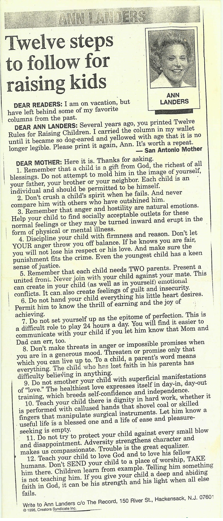 held by magnet to my grandmother’s refrigerator. She would clip any article that she thought my mother needed to read and each week a large portion of the time that my mother spent with her was taken over by the forced “share of information.” My mother would have rather read these clippings later in the evening when she had arrived home and spent the few hours that she had to spend with my grandmother, having a conversation. I think the part that my mother missed was that my grandmother wanted her to read the articles right then because she was not only interested in sharing this “important” information but then having an intellectual discourse about that topic. To be fair, I think another reason was that she didn’t trust my mother to actually read the clipping from Ann Landers that she found so important. Shirky’s point was that the exchange of information prior to the social tools of today was time consuming and the seemingly minor difficulties of clipping and saving or clipping and mailing a newspaper article were significant enough to limit the frequency. I don’t think everyone was determined as my grandmother and I will discuss those determined people and their impact more when we get to Chapter 7 and later in Chapter 10.
Going back to the Catholic Church scandal, it wasn’t just the fact that “easier and wider dissemination of information changes group awareness,” but that in order to have a large effect, there would need to be a change in collective action as well. Shirky uses the group Voice of the Faithful (VOTF), started in 2002 by Boston physician James Muller–only a few weeks after the Boston Globe series appeared–to show how the use of social tools not only made it easier to share information across geographical boundaries but to grow an organization’s membership exponentially in a previously unheard of period of time. Thirty people showed up in the basement of a church in January of 2002 for the first VOTF meeting. By March, more than 500 people overflowed their small meeting room and by the summer of 2002, VOTF hosted their first convention boasting over 25K members. The rate of growth was almost a thousandfold increase and until social tools came into play, this was inconceivable. In many ways, it still is. I have helped increase membership for many organizations and although, I’m good, I have never increased membership by that many, especially in that amount of time–nor have I seen it done. Nonetheless, one of the differences between pre-social tools and 2002 was the ease in group discovery and joining. With social networks, email, and websites it is much easier to locate groups that hold the same interests or passions that you do and once you locate them, it is easier to get information about their mission and goals. Plus, when you are ready to actually join the group, a simple online registration form and PayPal widget for dues saves each person a ton of time. Social tools then save the organization or group money because printed materials and mailing costs are no longer a factor. The growth of VOTF, along with the growth of several other groups with similar missions, helped effect change in the Catholic Church due to the power of collective action. Shirky notes that before social tools, the Catholic Church was not “inimical to improvised global organization of its parishioners because it simply wasn’t an option.”
Finally, in the last two paragraphs of Chapter 6 Shirky explains that “social tools don’t create collective action–they merely remove the obstacles to it.” A point that I believe is often forgotten or overlooked by many. People have protested organizations and governments forever – anyone remember the Conflict in Vietnam? Imagine what could have been different if the protesters of the 1960s to early 1970s had been able to use the social tools of today? I will end this discussion the way that Shirky ended Chapter 6–with a quote that spoke volumes to me:
“Revolution doesn’t happen when society adopts new technologies–it happens when society adopts new behaviors.”

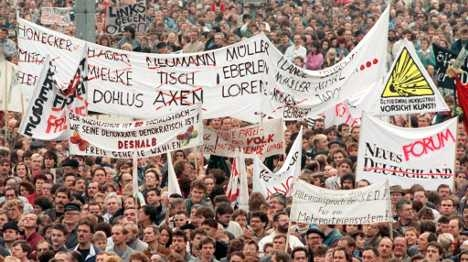 In Chapter 7 Shirky explains the difference between the power of individual action and collective action using the 1989 protests of the German Democratic Republic in Leipzig in comparison to the use of Flash Mobs and other socially coordinated tools of today as an example of how collective action can bring social change. I found the history of Flash Mobs quite interesting as I have a weird fascination with them– I always wanted to be a part of one or randomly be surrounded by one. Ironically enough, Flash Mobs began as a way to mock hipster culture (and you just have to love that) but over time they have become a useful tool of government protesters in places such as St. Petersburg, Russia and Belarus.
Never seen a Flash Mob? Check out this video:
And here is one for political action:
Being who I am and believing in liberty and freedom, I found this chapter especially interesting due to its political content. I actually LOLed when Shirky explained one particular Flash Mob protest of the Lukashenko government in Belarus. People were instructed to show up in Oktyabrskaya Square to eat ice cream and were subsequently arrested by the tyrannical socialist regime. The catch? As police were hauling away the ice cream eaters, bystanders were snapping digital photographs and video to upload to Flickr and Livejournal to show the world the Lukashenko oppression. Shirky states “Nothing says ‘police state’ like detaining kids for eating ice cream.”


Wow! Doesn’t that just sum it all up? Before social tools, governments were able to get away with a lot more. Shirky explains that “political action has changed when a group of previously uncoordinated actors can create a public protest that the government can neither interdict in advance nor supress without triggering public documentation.” Today, tyrannical governments get away with far too much in my opinion but when they are really naughty–they have to be better at hiding their secrets because the internet seems to tell all, just like it did with the NSA.
Remember when I mentioned those “determined” people in the discussion of Chapter 6? Shirky brings up an incredibly important point about the motivation of groups and the determined people behind them. Many people believe that a group of hundreds is run by hundreds when in actuality it is the determination and driving force of a handful that keeps the group running. He states “many people care a little about the treatment they get from airlines or banks, but not many care enough to do anything about it on their own, both because that kind of effort is hard and because individual actions have so little effect on big corporations.” This also applies to political change and is something that a person in my line of work deals with every day. For example, during the 2012 Ron Paul Campaign in Shelby County (I was the Chair for the Official Ron Paul Campaign), each of my team members couldn’t wait to participate when it was something they perceived as “fun,” such as a protest or a sign wave. However, when it came to the actual “work” of the campaign such as the door-to-door activities, phone banking, Get Out the Vote, and poll standing –the activities that actually WIN election–they weren’t as interested. In fact, some wouldn’t even participate. It was left to the handful of highly determined and motivated team members to carry the weight of the group.
Shirky reminds us that the “old model for coordinating group action required convincing people who care a little to care more, so that they would be roused to act” but now “the highly motivated people can create a context more easily in which the barely motivated people can be effective without having to become activists themselves.” This may be true for some groups and somewhat so for political action, but isn’t the case when it comes to political campaigns. Yes, the Facebook groups and meme sharing are needed and those who aren’t as motivated can certainly help with certain tasks–the spreading of the message, the education of others, and the sign waving. However, when it comes to the actual actions that WIN the election the motivated “people who were on fire” still wonder “why the general population didn’t care more, and the general population” still wonders “why those obsessed people didn’t just shut up!”


 10 Tips for Participating in Dizzying Twitter Chats by Kenna Griffin
 Journalist and media veteran, Kenna Griffin supplies Twitter Chat n00bs with some helpful hints to overcome the first time jitters.
Griffin explains that feeling overwhelmed during one’s first handful of Twitter Chats is extremely normal and that the fast pace of the posts can cause a dizzying effect in most people. However, she believes that the information and connections that one gains from the experience is worth taking a deep breath and not giving up.
Griffin spells out some simple reminders and guidelines for the Tweet Chat beginner, ranging from the importance of the Chat subject matter to understanding the chat’s rules. She also gives the basic instructions for tweeting a formal introduction and reminds readers that it’s okay to miss things during the chat – not all tweets are meant for everyone.
Personally, I found her 10 Tips to be quite helpful as I am just now learning the ins and outs of the Tweet Chat. For example, I wasn’t aware that each chat had specific rules and those rules were typically given out approximately one hour to 30 minutes before the scheduled start time. I was also relieved to know that it was in fact correct to use the TweetChat hashtag EVERY time you posted, even when speaking to a person from the chat through a direct message and that following people with whom you spoke during the TweetChat was appropriate and encouraged.
If you are new to Twitter or just new to Tweet Chats (or Twitter Chats, depending on who you are talking to), I highly suggest you check out Kenna Griffin’s 10 Tips for Participating in Dizzying Twitter Chats and some of the other articles located at the bottom of this post.
 5 Ways Twitter Can Help Your Business by Kristi Hines
(VIDEO) How To Twitter Chat
(VIDEO) How to Participate in a Live Twitter Chat







 The World According to Robin