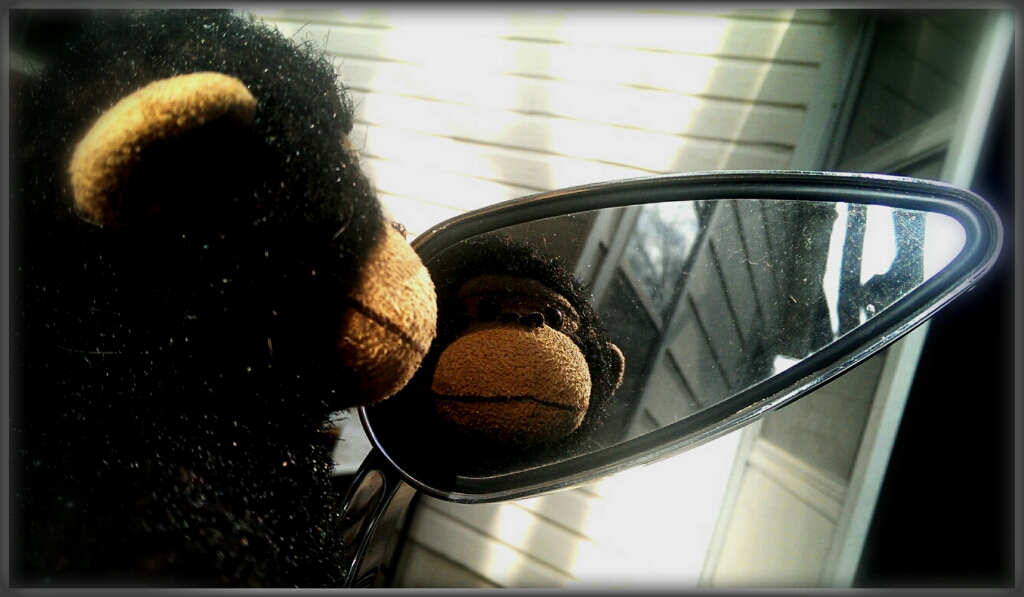
Bonono decided that he wanted another day off from this Photo365 Challenge, so I decided to show people just how exciting Mass Communication Research Methods was last night. This was a lot more fun than usual!






- “Set up new WordPress blog for your topic of focus/beat. This is SEPARATE from your journal blog. I know, two blogs, crazy! Choose a name for it carefully, and a theme. If you’ve already done this, bully for you. Send me the URL and I’ll create a new blogroll.”
- “Create about page for this topic blog”
- “Set up blogroll on your topic blog with at least five sites related to your topic. Here’s how to do it.”
- “Sign up for at least one email newsletter and/or an RSS feed reader related to your beat (you might want to sign up for some related to our profession more generally, too). There are many possible feed readers out there – do some research to see which one you think best suits you. For example, here are some possibilities, including Feedly.”
- “Set up Google Alerts for your blog topic”
- “If you are already a blogging whiz, or have a topic blog set up already, are there any new features or widgets you could add? If your blog is pre-existing, be sure you do at least one new thing to spruce it up. Describe what you did in your journal blog”
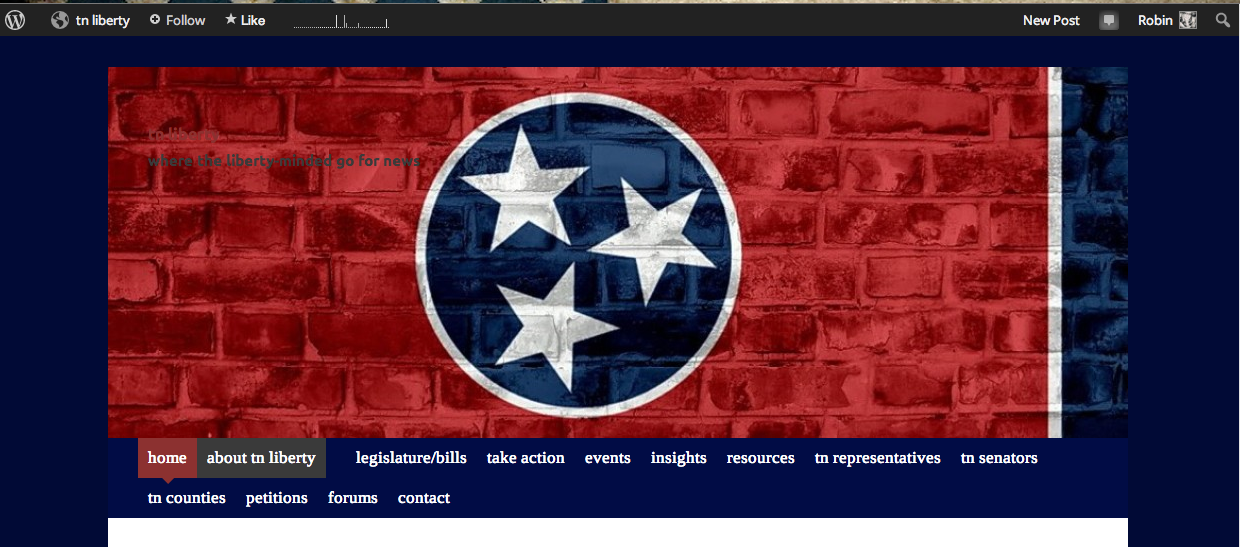 If you’re reading this, you can see that I am quite capable of setting up a blog. WordPress makes it fairly easy. Pick a theme. Check. Name your blog. Check. Add a tagline. Check. Decide if you want your home page to be static or a revolving door that showcases your most recent posts and then, mark it as such. Check Check. Begin adding pages to your new blog. Check Check Check. Add some categories. Check times ten. And here is where the beginner user may have begun to get a little confused. No big deal. WordPress is there to help you with an assortment of support pages, located here. And if you can’t find the answer you need there, check out the forum for support categorized by simple topics, located here. “So what’s the big deal,” you ask? “Obviously, you know enough to make a decently visually appealing and functioning blog.” Yes, I can make it pretty-ish and functional but you forget, I’m a print designer and….drum roll….a perfectionist.
The print designer with a perfectionist personality disorder is used to being in control of how text appears, the spacing in-between each line and each character, the color of the boxes around words and widgets, and so on, and so forth. Sure. I created a blog and matched the color of the fonts to the header that I uploaded – one that I created in Photoshop and InDesign for my Facebook page, Tennessee and Mississippi Leadership. BUT, now there are appearance problems with my site.
 For some reason, I cannot get the Site Title to change colors in order to become visible against my dark header. I’m not a complete n00b, so I knew a few tricks to try and i refused to be pwned by WordPress. I knew that I wanted the color to be #ffffff (that’s white, for those of you who don’t know). I knew that the text size needed to be at least 50px. I knew that there needed to be extra padding (what spacing is called in HTML) between the Site Title and the Site Description. I tried everything I could think of but no luck. My brain started to become mush and I was heading for an all out war with WordPress. I knew that I had to learn the thing I had been dreading for years…HTML and CSS coding.
Great. Just great.
For those of you who do not know what CSS and HTML coding look like – check out the development tools option available in your browser. If you’re using Chrome, it’s located under View—>>Developer—>>Developer Tools. You can also right click on any element on a web page and choose “Inspect Element.” A box will show up on your screen and you can look “behind the scenes” at any webpage. This will give you an idea of the code necessary to create text, images, boxes, headings, spacing, and everything else on a webpage. Here is what this one looks like right now. Check out the white box highlighted at the bottom of this screen shot. That’s what I was about to “mess with.”
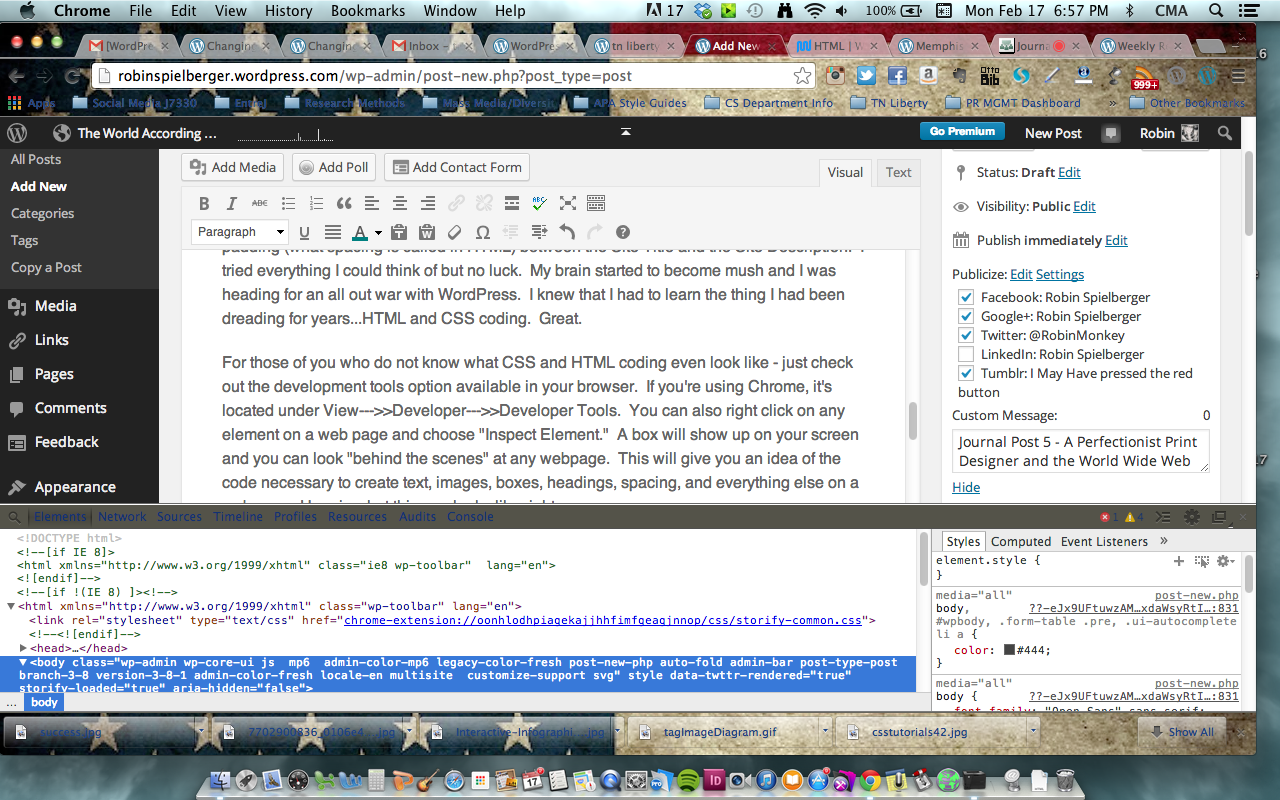
 After realizing that I wasn’t exactly sure what I was doing, I checked out some helpful tips and tricks on several blogs. These sites gave me the basic code that I needed to change simple text. I could now make sentences or words bold by adding <strong>PUT WORDS HERE< /strong>, italicized by adding <em>PUT WORDS HERE< /em>, or even bold and italicized by adding <strong><em>PUT WORDS HERE< /em>< /strong>. I was making headway.
 Next, I investigated the coding needed to change colors, fonts, and sizes in sentences, paragraphs, and words. I figured out that you can use other coding to make colored background boxes, change the text color, and change the appearance of entire groups of text. Not just individual posts or pages but you can change how the “default” text appears for different headings 1, 2, 3, and so on.
I was super excited and throughout the next two days, I filled my mind with every piece of needed code that I could absorb.
Now, that I had spent hours learning advanced brain-frying code, it was time to actually complete the assignments that were required of me for this week.
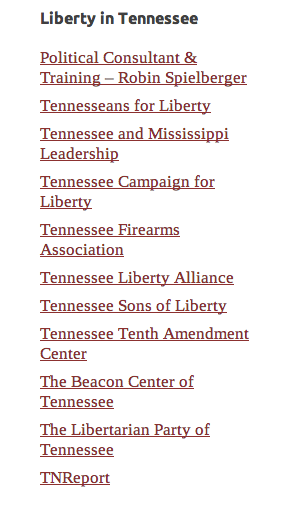
I gathered the URLs for important website and blogs to add to the sidebar of my tn liberty blog in order to guide people to other sources of information about liberty and liberty in TN.
I put the sites into several categories such as Liberty Folk to Follow, Liberty Organizations, Liberty in Tennessee, Liberty Resources, and TN Student Liberty. Under each category, I added links to some of the most popular sites.
 Mention & Google Alerts
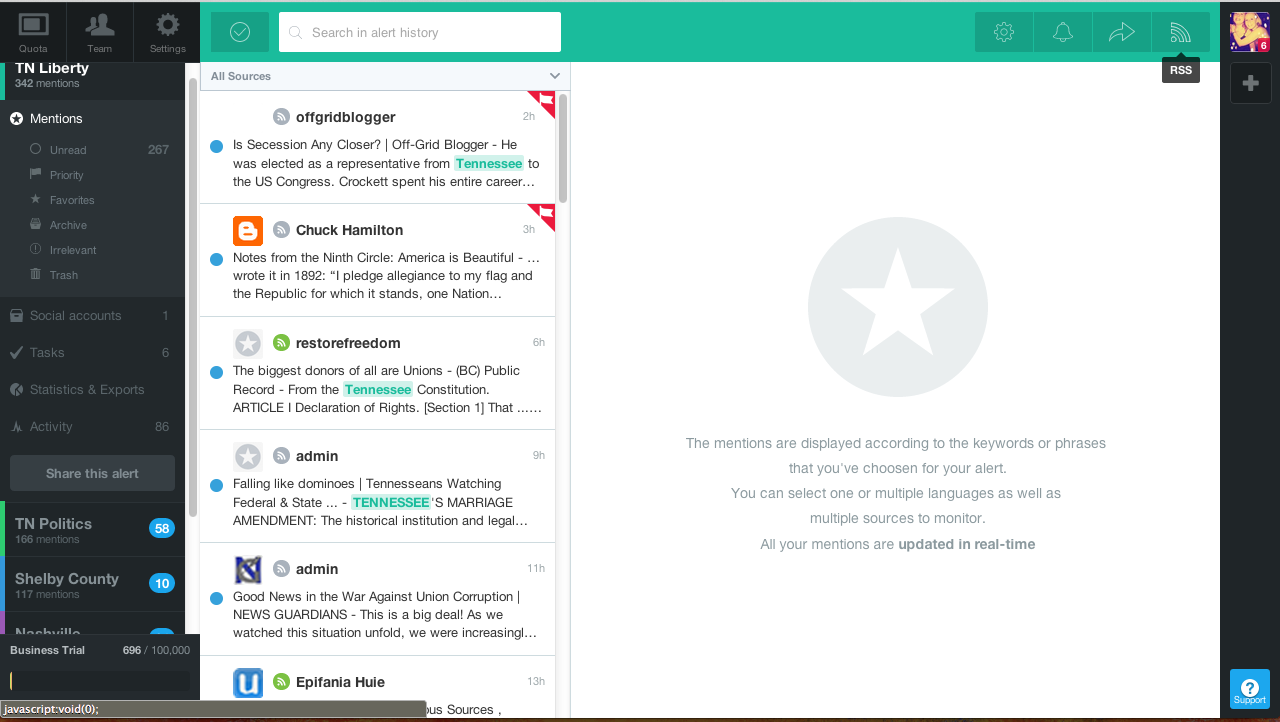
Next, I decided to go ahead and set up an alert system for my blog topic of liberty in Tennessee. I have used several different “alert” systems in the past and decided to set up Mention, first.
I created several alerts such as “Tennessee” AND “Liberty,” “Tennessee” and “Politics,” “Memphis” AND “Council” OR “Commission” OR “laws” OR “government,” and “Knoxville” AND “politics“. I added an alert for each major area of Tennessee and used several different search options in order to get a more comprehensive collection of news stories.
 I did the same thing for Google Alerts. It is a much less visually appealing system, as you can see on the left. It also doesn’t provide you the option to sort and set tasks for your “alerts.” For example, Mention allows several users to work with the same “alerts” and share them with each other – assigning tasks such as “post this to the blog” or “verify this information.” Google Alerts are sent to your email address either daily or once a week, depending on your settings.
I also set up Google Alerts and Mention to inform me if anyone in the interwebs happens to mention either one of my blogs specifically. As I learned in PR Management last semester – there are numerous tools available in order to know what your audience is saying about you and how they are responding to you. You have to stay engaged – so I want to know if people are talking about me. True – it probably has less to do with monitoring my “brand” and more to do with the human nature psychosis of “OMG SOMEONE IS TALKING ABOUT ME?!?!? WHAT ARE THEY SAYING?!?!”
So, there is this thing called a RSS feed. It sounds more complicated than it actually is. Subscribing to a website RSS removes the need for you to manually check the website for new content. Instead, their browser constantly monitors the site and informs you of any updates. You can also command the browser to automatically download the new data.
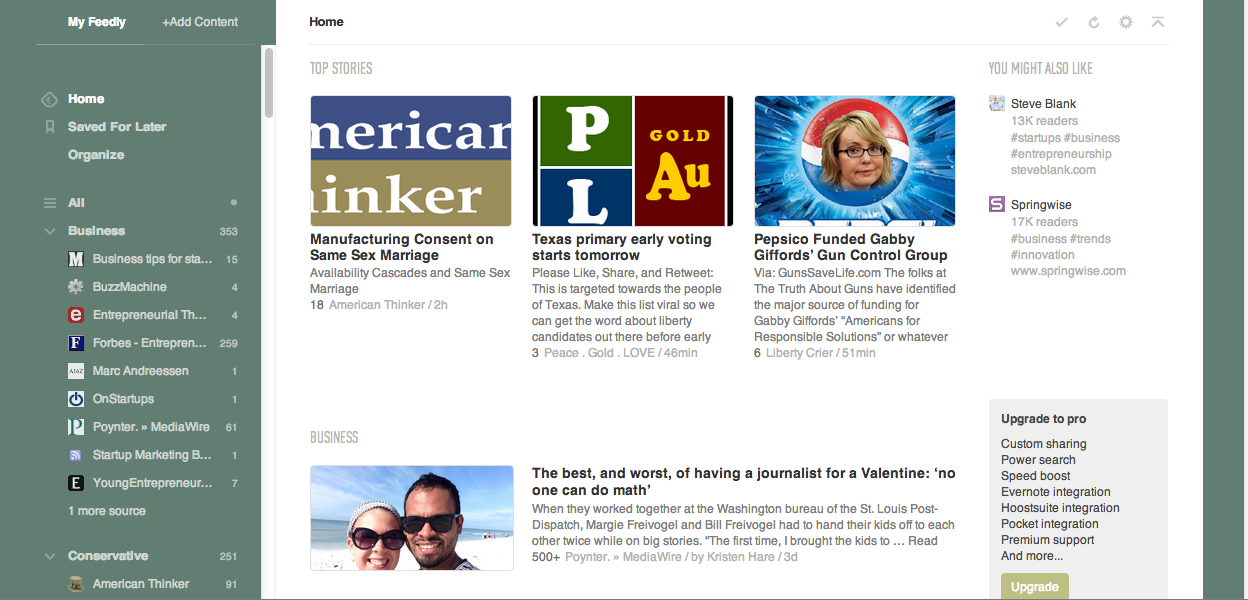 I first set up the Google Chrome Browser desktop app for Feedly from the Chrome Web Store. It works quite well, plus it has a visually appealing interface. If you can’t tell by now, I like ALL the things to look pretty, as well as neat and clean. I used Feedly’s search box to enter terms that were relevant to Tennessee and liberty and politics. Plus, I also added a few blogs and sites manually. For the most part – Feedly was helpful for major news sites and major blogs. I also added more journalism influencers, startup kings, and media sites to Feedly, because it seems to be the best bet for actually aggregating my everyday news.
I then found another extension located in the Chrome Browser Web Store. Yep, that sure sounds a lot like an Apple product but hey, whatever works. I downloaded the extension for a  simple RSS Feed Reader and it loaded itself into my browser bar for easy access. I really like it a lot for its simple integration directly into my browser space. I don’t need a desktop app and it doesn’t take up a lot of space or waste space on pretty pictures. I like pretty pictures and when i’m interested in reading a collection of news stories, I’ll probably use Feedly, because it displays a photo and headline in an aggregated news format like most apps would. This RSS Feed Reader reminds me of something very old school that would run on the very basic operating systems.
However, it gets a 5 star rating and the other readers barely get 3 stars. It’s simple and to the point. I add websites and blogs, put them into folders based on my category creation, and when they get new information, a number appears next to it signifying how many new stories are ready for me to read. I can easily click the X, if it is not pertinent or click the Check mark once i’ve read it or just to mark it as read and move on. I’d check it out if you are looking for ways to add content to your Topic blog quickly and simply.
 Using Code to Spruce it Up
Using a text widget, I first wanted to add a donation button to my page. After reading an article about how to do so, I decided to give it a whirl. Then, I had a thought. I wonder if I would be able to add a colored box around it so that it stood out and matched by overall design? I opened the text widget box and began messing with the code. After moving it piece by piece and saving each time so I didn’t lose anything, I was able to get it close to what I wanted. I’m sure this won’t be my final result. Why? Because as I said earlier, I’m a perfectionist.

UPDATE: And I was right. After writing this draft, going to eat dinner, and watching The Following, I came back and messed with the code until I was happy. Check it out on my site!!
Next, I wanted to use the text widget and code to create a Title and Tagline that would be located on top of the above donation widget. I realized that the donation widget used a <div/> code (a type of coding for paragraphs and divisions, if you will) and inside that code the button itself was actually a link URL image code that starts with <irc. I figured why not use the same type of coding to create the Title and Tagline “widget” that I wanted.
 After creating, editing, and saving for approximately 30 minutes, I created something close to perfect. I’m very happy with it actually but will probably edit it again to make the tagline a little smaller. However, it is growing on me, as is.
Overall, my site is coming along nicely. I am still trying to figure out how to edit the CSS on the theme stylesheet in order to make my actual site title the correct color and increase the font size but I have some posts on the CSS Customization Forum and am sure that someone will help me out any day now.
Until then – i’m good.
UPDATE: An extremely nice guy responded to me on the WordPress CSS Customization forum with some tips on how to go about changing my title and site description to better fit my wants and needs. He supplied me with a bit of basic CSS code and pointed me in the right direction. I messed around with it and added some information about margin spacing – had NO idea how to go about it or if it was THE way to nudge the text to the left of the page but what was the worst that could happen? It didn’t work?! So, I tried and it worked! I had noticed that in the sample text a line of code about margins ( margin-bottom: 20px; ). I wondered if I were to write code on the next line for margin-left if that would move my text closer to the left side of the page. Low and behold – it worked! I played around with the spacing and the margins and anything else I could think of and came out with an awesome site title for my tn liberty blog.
Although now, I’m wondering how to move the Site Title and the description to the right side of the header…a perfectionist’s work is never done but that’s okay…i’ll figure it out because I know I can!





This week the readings, an article and several chapters of a book, written by two of the most well-known journalism and social media influencers in the county, Jay Rosen and Clay Shirky.
Before we begin, I want to take a few moments to introduce these influencers.
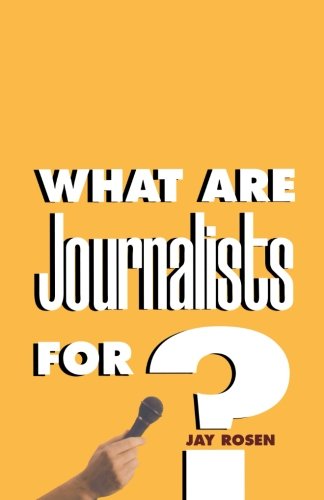
 Jay Rosen has been on the journalism faculty at New York University since 1986 and served as chair of the Department from 1999 to 2005. He has been one of the earliest advocates and supporters of citizen journalism, encouraging the press to take a more active interest in citizenship, improving public debate, and enhancing life. His book about the subject, What Are Journalists For? was published in 1999. Rosen is often described in the media as an intellectual leader of the movement of public journalism.
 Rosen writes frequently about issues in journalism and developments in the media. Media criticism and other articles by Rosen have appeared in The New York Times, The Los Angeles Times, Salon.com, Harper’s Magazine, and The Nation. He is also a semi-regular contributor to The Huffington Post.
He runs his own weblog called PressThink, which concentrates on what’s happening to journalism in the age of the internet and his writing for the weblog won the Reporters Without Borders Freedom Blog award in 2005.
 Clay Shirky, a writer, consultant and teacher on the social and economic effects of Internet technologies, has a joint appointment at New York University as a Distinguished Writer in Residence at the Arthur L. Carter Journalism Institute and Assistant Arts Professor in the New Media focused graduate Interactive Telecommunications Program (ITP). His courses address, among other things, the interrelated effects of the topology of social networks and technological networks, how our networks shape culture and vice-versa.
He has written and been interviewed about the Internet since 1996, with columns and writings that have appeared in Business 2.0, the New York Times, the Wall Street Journal, the Harvard Business Review and Wired.
His consulting practice is focused on the rise of decentralized technologies such as peer-to-peer, web services, and wireless networks that provide alternatives to the wired client–server infrastructure that characterizes the World Wide Web. He is also a member of the Wikimedia Foundation’s Advisory Board.
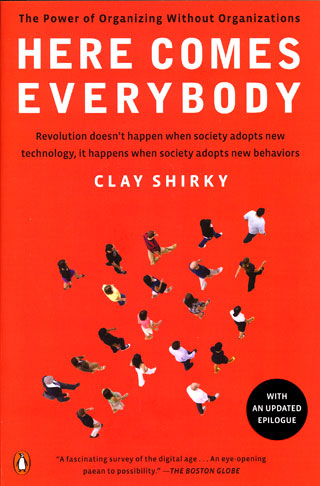 In his book Here Comes Everybody, Shirky explains his favoring
  of crowdsourcing and collaborative efforts online and uses the phrase “the Internet runs on love” to describe the nature of such collaborations.
In 2010 Shirky published Cognitive Surplus: Creativity and Generosity in a Connected Age which expands on themes introduced in Here Comes Everybody. The book follows concepts he introduced in a Web 2. 0 conference presentation April 23, 2008 called “Gin, Television, and Social Surplus.”
Shirky introduces Cognitive Surplus as a continuation of his work in Here Comes Everybody. “This book picks up where that one left off, starting with the observation that the wiring of humanity lets us treat free time as a shared global resource, and lets us design new kinds of participation and sharing that take advantage of that resource.”
Most recently, Shirky was featured in Journalism Degrees and Program’s article Best in #Journalism: 151 Twitters Worth a Follow by Sean Flynn. Beginning the section entitled “Professors,” at number 111, Shirky is considered to be one of the 18 Journalism Professors  worth following.
As an aside, my social media and entrepreneurial journalism professor Carrie Brown-Smith is featured at number 117, hanging in among the top heavy hitters in this new “business” of journalism. Check our her blog, The Changing Newsroom, to learn about cutting edge and entrepreneurial journalism.
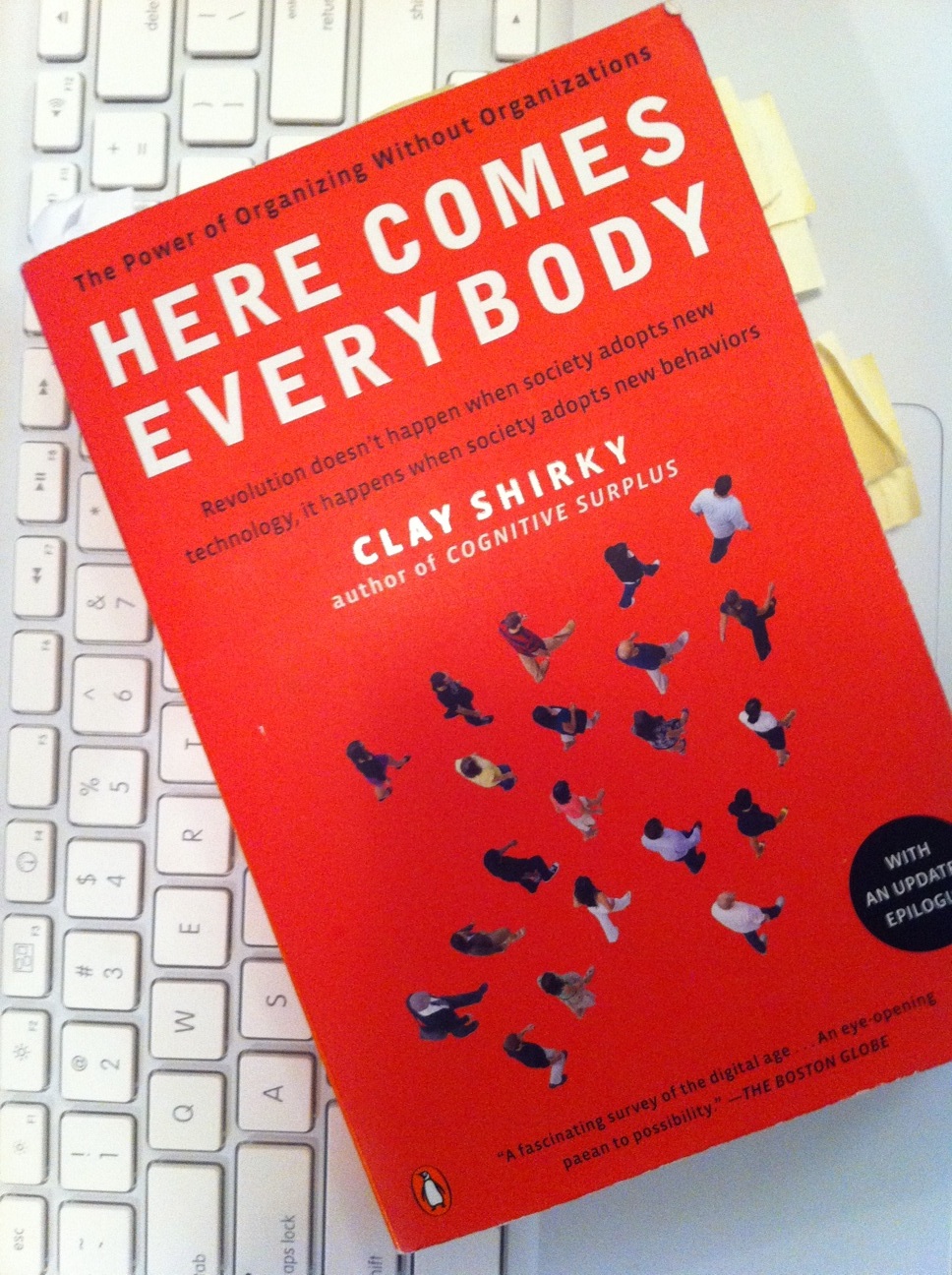 First, we will revisit the writings of Clay Shirky, this time commenting of Chapters 3-5 of Here Comes Everybody.
Shirky discusses the birthday speech given to Strom Thurmond in 2002 by long-time Mississippi Senator and former Senate Majority Leader, Trent Lott. In this section, he explains yet another example of how the internet has affected journalism. No longer do the journalists of major networks and newspapers single handedly decide what makes news, news. Today, due to the millions of bloggers and social media enthusiasts, any topic that a group of people find important enough, to discuss for long enough, can become mainstream news.
In the case of Trent Lott’s infamous speech, the majority of mainstream media failed to cover the speech because it was filed away under “not breaking news” due to the event being a simple birthday party. However, after the speech promoted Strom Thurmond’s 1948 overtly segregationist Presidential campaign and insulted the citizens of Mississippi by lumping them into the category of Strom supporters, bloggers took to their blogs, facebookers to their news feeds, and twitterers to their tweets in order to speak out against Lott’s actions and to, hopefully, distance themselves from such discriminatory implications.
For days, the “story” broke on the internet and the mainstream media took notice. I’m sure a bunch of “shoulda woulda couldas” were roaming the halls of every major newspaper and television station in the country, especially in the beltway. Unfortunately, at this point these traditional news outlets would’ve had to swallow their pride and make apologies for dismissing Lott’s speech and the birthday party when it happened, if they wanted to speak out against his chosen message.
Luckily, for the mainstream media, no one knows how to beat a dead horse like my fellow libertarians and libertarian republicans. My politically like-minded brethren are like dogs with bones when it comes to letting go of subjects they feel should be publicized. Trent Lott‘s speech happened to be one of these “bones” and according to Shirky, “because the weblogs kept the story alive, especially among libertarian Republicans, Lott eventually decided to react.”
Now, five days after the speech, the mainstream media wouldn’t have to swallow any pride or make amends. They could simply cover Lott‘s “halfhearted apology” for his statement and run footage of the original speech right next to it. This would open the subject up as “breaking news,” and allow for reporters and journalists to editorialize. No longer was defining “the news” as simple as Shirky said, “events that are newsworthy, and events that are covered by the press.”
Many have grumbled about this definition for years, complaining that some stories covered by the mainstream media are not newsworthy and that some newsworthy stories are not covered enough. Libertarians, and any other third party or even obscure issue groups, have been complaining about this “practice” for years. Why did so many serious topics go uncovered and so much “fluff” make it onto the front page? As Shirky pointed out, using the example of Trent Lott, this “link is now broken.” Shirky states, “From now on news cans break into public consciousness without the traditional press weighing in. Indeed, the news media can end up covering the story because something has broken into public consciousness via other means.”
As a blogger and social media user, with a journalism degree and a background in public relations, I am excited about this new frontier on which we are walking. However, as a political activist and holder of libertarian ideals, I have mixed emotions. Don’t get me wrong, the ability for the masses of people to publish information that the mainstream media either overlooks, dismisses, or hides is incredibly exciting and beneficial. The problem lies with the audience. Typical Americans of voting age, still receive most of their information from the mainstream media.
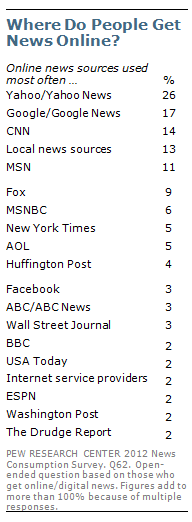 According to Pew Research Center for People & the Press‘ 2012 report, In Changing News Landscape, Even Television is Vulnerable: Trends in News Consumption: 1991-2012, despite a declining trend, “55% [of Americans] say they watched the news or a news program on television yesterday,” showing little change from recent years. This report also shows that “the overall share of Americans saying they regularly watch local television news has slipped from 54% in 2006 to 48% today – and in that regard it remains one of the news sources with the broadest reach.” Finally, Pew points out that 51% of those 65 and older say they regularly watch cable news and seven in ten (71%) say they watched television news, read a print newspaper or listened to radio news yesterday.
I find this highly disturbing. There are so many more sources of valuable information just sitting on the internet waiting for consumption. As an activist who volunteered in 2008 and worked for the 2012 Ron Paul campaign, I know that an idea planted, can sprout and grow just like a seed. In 2007, the word libertarian, much less the ideals of libertarianism, were not common knowledge. As the liberty movement grew, much in part to the efforts of Ron Paul, the political ideals became more common. This spread of ideals is owed in great part to the efforts on online bloggers and political activists. Shirky stated, “the same idea published in dozens or hundreds of places, can have an amplifying effect that outweighs the verdict from the smaller number of professional outlets.”
The liberty movement couldn’t be a better example of this idea. I noticed in early January of 2012, at the beginning of the Republican Presidential Primary, that the only candidate mentioning the issue of state’s rights, was none other than Ron Paul. This issue was verbally echoed by millions of his supporters and blogged by thousands in the coming weeks. By late February, on my 32nd birthday and during one of the Primary debates, every single candidate on stage mentioned the issue of state’s right in one form or another. It was blatantly obvious. Each candidate’s team had witnessed the growing support for state’s rights and in order to level the playing field, recommended that the candidate begin to show his support. I have witnessed the noise, firsthand, and resulting difference that a thousand blogging voices can make. However, it isn’t quick and it isn’t always eventually acknowledged.
With data showing a rise digital news consumption and a decline in traditional news consumption, the numbers of citizens who report blogs as their news source has maintained 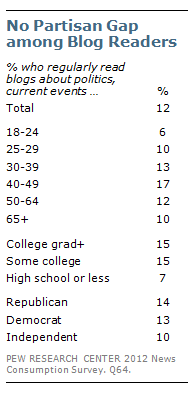 a relatively low response rate. According to the same Pew study mentioned earlier, “slightly more than one-in-ten (12%) of all Americans regularly read blogs about politics or current events and another 21% say they read them sometimes. Just less than half (45%) never read blogs or do not use the internet. The numbers of those who read blogs regularly are little changed since 2008.”
The report also shows that “among age groups, regular blog reading is lowest among those 18 to 24 (6%), . . . highest among those 40 to 49 (17%),” and little difference among the age groups in between. When readers are categorized by education level, “15% of college graduates and those who have had some college regularly read blogs, a number that falls to 7% for those with high school or less.”
I can’t help but wonder why so few people regularly receive news from blogs when so many citizens report that they trust all new sources similarly. One answer could be the sheer amount of information lurking on the world wide web and that people are simply overwhelmed by the options.
In 7 Things About The Mainstream Media That They Do Not Want You To Know, an article on Alex Jones‘ Infowars, Michael Snyder of The Economic Collapse states: “We live at a time when it is absolutely imperative to think for ourselves, but most Americans are being absolutely overwhelmed with information and seem more than content to let others do their thinking for them. Sadly, this is greatly contributing to the downfall of our society.”
Shirky’s theory of mass amateurization, the “result of the radical spread of expressive capabilities,” and the “comparisons between the neatness of traditional media and the 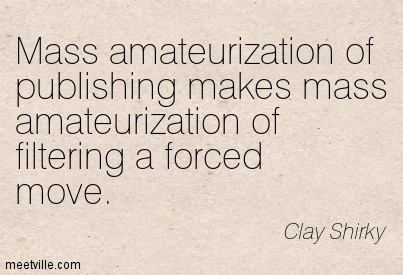 messiness of social media” is directly relevant to how Americans have become overwhelmed and symptomatically, uninterested. Shirky also noted that when comparing traditional media and social media in terms of neatness versus messiness, the system of filtering is often overlooked. In the process of traditional media publishing, there is a gatekeeper – an editor, or one who decides what should be printed and what stories to forgo. In social media and blogging, the user is the writer, the creator, the editor, and the publisher. No longer does the published word mean that someone else thought it was worth reading. When searching for news on the internet, today’s citizens must be filtering gurus because as Shirky stated, “mass amateurization of publishing, makes mass amateurization of filtering a forced move.” Filter-then-publish is a thing of the past. We live in a publish-then-filter society.
He uses the notion of picking up a bookstore and shaking it onto a football field to describe the contents of information on the web. Of course, you will see classics by such writers as Shakespeare, Fitzgerald, Chaucer, Hemingway, Tolstoy, and Plato. You will also see outstanding works of fiction by authors such as John Grisham, Stephen King, Robert Ludlum, James Patterson, J.R.R. Tolkien, and J.K. Rowling, and works of insightful nonfiction by Winston Churchill, Ron Paul, Jeff Jarvis, Woodward and Bernstein, and Clarence Thomas. However, books with titles such as “Cooking With Pooh“ (I assure you, it’s not about the lovable bear, Winnie), “The Dork of Cork,“ “Oral Sadism and the Vegetarian Personality,” or “Bander Snatch“ as listed on Huffington Post’s article “Twelve of the Worst Book Titles Ever,” by Lee A. Jacobus. My point is this: filter, filter, filter!
Everywhere you go today, you must filter. At the grocery store, you must decide which of the 25 brands of peanut butter is truly all-natural and which is jam-packed with additives. When shopping for clothes, you must choose which dress is made with lasting, quality materials worth the $200 and which one will simply fall apart after a few wears. The internet is no different.
Hopefully, Americans will stop throwing their hands up at the overwhelming amount of information and learn to filter the good from the garbage when it comes to internet news consumption. Social media and blogging are part of this incredible new digital frontier  where everyone’s voice can be heard and all ideas can be expressed. These platforms give rise to information overlooked or dismissed by the traditional mainstream media and can alert citizens to wrongdoings such as Edward Snowden‘s exposure of the NSA spying Julian Assange‘s leak of the Iraq War Logs. Social media and blogging can spread ideas that may otherwise not be heard such as the case with the Liberty movement and the Ron Paul Revolution. But they can also spread false information, reinforce bigoted and ignorant ideas, give guidance on bomb building, or how to best be bulimic. The good is mixed with the garbage and we must learn to decipher between the two, ultimately tossing the garbage. We can not, however, toss the platforms in with the trash, nor dismiss the writers.
The Daily Show with Jon Stewart – Racists Have Birthdays Too! (December 11, 2002)

As soon as I finished reading Jay Rosen’s, “The Twisted Psychology of Bloggers vs. Journalists: My Talk at South by Southwest,” I immediately began to think of only one thing. I couldn’t get it out of my mind. It played over and over like a song on repeat.
Now that we have gotten that out of the way, I will discuss the finer points in Rosen’s talk on this neverending barrage of insults exchanged between bloggers and journalists, and the potential reasons for it.
He begins by reiterating that the “distinction is eroding” and “the war is absurd” and that everyone should just get over it – points Rosen made in 2005 in his essay “Bloggers vs. Journalists is Over.” I happen to agree with these statements. However, I do realize that it is easier said than done because there are some existing finite distinctions which are still applicable.
 Then, he makes an excellent point by stating that “bloggers and journalists are each other’s ideal ‘other.'” If you aren’t quite sure what he means by this, let me enlighten you:
Now, on the other hand:
Each, has their own pros and cons that the other covets. The Journalist is envy of the immediate publishing rights of the blogger and the lack of training. The Blogger is envious of the respect received by the Journalist, and so on and so forth.
Journalists chose to say things disparaging bloggers, such as in an Editor’s Column in an Australian newspaper did when he said: “Bloggers…represent nothing. They whinge, carp, and whine about our role in society, and yet they contribute nothing to it, other than satisfying their juvenile egos.”
Who’s being the child now, mister Editor? Say what you mean – you’re jealous of some of the advantages that bloggers receive and some of the respect that they are receiving as well.
 Bloggers choose to talk about the “lamestream media” but many of them re-post stories from these same outlets. Bloggers, say what you mean – you’re upset at how they chose to write the article, you think they are playing lapdog to the government, and you’re also jealous at the recognition they receive for doing it.
If everyone would just say what they mean – then they all have valid points. It’s when the blame game starts and the finger pointing turns to mud-slinging that society is losing. Both mediums and both “professions” are valid and needed in our society.
It has come to the point where some journalists aren’t being objective (neither are the bloggers, but they aren’t typically supposed to and the ones that choose to, bully for them), aren’t acting as the watchdog for the government, have sold out or are refusing to open their eyes and study a situation from all angles. So now, the bloggers are the watchdog of the journalists. The journalists, with as much weight as their words carry and as far as their pens reach, should be held accountable by the people. Bloggers are there to do that.
Don’t get me wrong – not all bloggers are worth the laptops they write on. Their bogs are filled with grammatically incorrect, uninsightful, regurgitated, or ignorant garbage. But as I said earlier in this post, when talking about Shirky’s theory of mass amateurization and thus, forced filtering – we must filter the good from the bad! Don’t throw the baby out with the bathwater! Some journalists aren’t worth their press badges, either. So let’s all stop pointing fingers and mud-slinging and get back to the issue at hand.
 Blogging is not going to REPLACE the press! Rosen said it differently by saying “blogging cannot replace the watchdog journalism that keeps a government accountable to its people,” but I don’t exactly agree with that statement – at this time. I feel that all of the press isn’t doing the best job in that department these days. A majority is blatantly ignoring candidates running for office and singing praises of government officials when no praise should be sung – among other things. However, I believe that true journalism will last and it should last. It should live on to overcome the disruption caused by the internet, social media, and blogging to its livelihood and perform the duties it was created to perform.
Journalists ARE trained and may know a few things bloggers don’t. Lucky for me, I’m both a trained journalist and a blogger. I choose to work as a blogger with the values and knowledge, of a journalist.
Rosen stated that “bloggers look more like the ancestors of today’s journalists,” and in many ways, I agree. Thomas Jefferson was a huge proponent of the free press as hopefully, most of you know. In his time, the newspapers were filled with biased viewpoints and writers, reporters, editors, and journalists who felt the need to answer to a “higher being” – usually the person, who paid the person, who paid the writer.
His idea of the First Amendment in  our Bill of Rights, which keeps the government from taking away our inherent right to free speech and press, was one of complete and total freedom. He felt that no longer should citizens remain quiet when they saw injustice. He urged them to pick up the pen and publish their thoughts – and that, they did. Today’s bloggers feel the need to pick up their pen and publish their thoughts just as our forefathers did. The profession of Journalism remained intact then, although changed by the pressures of the people. So as Journalists today, instead of playing the blame game and complaining about what bloggers are doing or the respect that they are receiving, ask yourselves this – Why do they feel so compelled to write and speak out? Why are they receiving respect for what they do? How could you learn from them or from what they are saying? How could you be better?
I leave you with a few words of wisdom from Thomas Jefferson:
“Our liberty depends on the freedom of the press, and that cannot be limited without being lost.”
“Nothing can now be believed which is seen in a newspaper. Truth itself becomes suspicious by being put into that polluted vehicle.”
“Whenever the people are well informed, they can be trusted with their own government; that whenever things get so far wrong as to attract their notice, they may be relied on to set them to rights.”
“The basis of our governments being the opinion of the people, the very first object should be to keep that right; and were it left to me to decide whether we should have a government without newspapers or newspapers without a government, I should not hesitate a moment to prefer the latter. But I should mean that every man should receive those papers and be capable of reading them.”
“Where the press is free, and every man able to read, all is safe”
“Our first object should therefore be, to leave open to him all the avenues of truth. The most effectual hitherto found, is freedom of the press. It is therefore, the first shut up by those who fear the investigation of their actions”

 The World According to Robin