
Robin Rambling on Week 5 Readings

This week’s readings were about solving social dilemmas, new tools to create social capital, how to shoot decent photos, and journalistic uses for Pinterest. You can even leave a comment at the bottom there. Yes – see, right there at the bottom where it says to “leave a reply” – feel free to share your insights with me!
Chapters 8 & 9 of Clay Shirky’s Here Comes Everybody
 In Chapter 8, Shirky begins by explaining the Prisoner’s Dilemma in order to show the complicated process of solving social dilemmas and how social tools only amplify this process. If you haven’t heard of the Prisoner’s Dilemma, it can be explained most simply like this:
Together, you and I commit a crime. We get arrested. We, now have 4 options:
- You and I both keep our mouths shut, spend a night in jail, and go free the next day
- You spill all when offered a reward to turn on me and I face charges and go to jail for a long time
- I spill all when offered a reward to turn on you and you face charges and go to jail for a long time
- We both spill all when offered a reward to turn on each other and we both face charges and go to jail for a long time.
 Personally, I only see one feasible option – You and I BOTH keep our mouths shut, spend one night in jail, face no charges, and walk free the next day! Apparently, it isn’t always that easy. When two people who may not know each other very well or haven’t developed a level of trust are in this situation, the dilemma gets more complicated. To me, it shouldn’t – assuming we committed this crime together. However, not everyone has my values or moral code. I’m a firm believer in two things. 1. Always hedge your bets – if they are trying to offer you a reward, then chances are they do not have enough evidence to make their case. 2. When you “team up” with someone, whether it be to serve food to the poor or to commit a crime, you always have your partner’s back – no matter what! As time has gone by, I have realized that I may be one of the only people who still hold these values so dearly. It seems that in today’s world, there is truly no honor among thieves.
Next, Shirky adds what Robert Axelrod, a University of Michigan sociologist who has conducted significant studies on the Prisoner’s Dilemma, calls “the shadow of the future.” Shirky explains this theory by stating “we all face the Prisoner’s Dilemma when we interact with people who could take advantage of us, yet we actually manage to trust one another often enough to accomplish things in groups. The shadow of the future makes it possible for me to act on your behalf today, even at some risk or cost to me, on the expectation that you will remember and reciprocate tomorrow.”
To learn more about the Prisoner’s Dilemma or Axelrod’s shadow of the future, watch the following video or check out the sites below:
- Prisoner’s Dilemma
- Iterated Prisoner’s Dilemma Game and Simulation
- Prisoner’s Dilemma In Real Life – Business Insider
- Prisoners’ Dilemma – Library of Economics and Liberty
- Game Theory .net – Interactive prisoner’s dilemma
- Prisoners’ Dilemma – Serendip
- Shadow of the Future – Game Theory 101
- still more complicated: The shadow of the future
- The Evolution of Cooperation – Wikipedia, the free encyclopedia
- The Shadow of the Future – Daniel Hengeveld
Later in Chapter 8, Shirky uses one of my favorite examples to explain how Robert Putnam’s belief that social capital is declining in America, as stated in his article Bowling Alone, is not entirely true. Scott Heiferman, the founder of a successful NYC web business, read Bowling Alone and set out to reinvigorate America’s social capital. He assumed that people knew what they were missing when it came to their social capital and communal interaction and that if it were easy to increase in today’s world of suburban houses, carpools, two-worker families, and the devaluation of the dollar, people would certainly take steps to do so. Heiferman also recognized one other key factor that would make his forthcoming business a success – that no longer should the internet be treated as some sort of “other world” or “cyberspace,” when in fact it was simply an extension of the real world. Shirky explains that Heiferman “realized that if enough people are online, you don’t have to group them solely by affinity (pug lovers, White Stripes fans, libertarians, whatever). Instead, you can group them by affinity and proximity (pug lovers in Poughkeepsie, White Stripes fans in Walla Walls).” Thus, Meetup was born.
Now, let me just take a minute to jump for joy and squeal like a little girl because for the first time a Journalist and author mentioned libertarians in a non-negative light! If i’m going to be 100% correct, this is the second time it has happened, as Shirky positively mentioned libertarians in Chapter 3, when discussing the infamous Trent Lott birthday wish to Strom Thurmond. You can read about it here. Okay, back to Meetup.
 What Heiferman was able to recognize and Meetup was able to show through the popularity of groups for virtual contacts was that “even online communication that emulates face-to-face interaction still leaves people wanting human contact.” Meetup’s success also showed that people weren’t simply recreating the “old model of community, because it provided a different set of capabilities” and the groups that first took advantage of these new tools were groups of people who had a great desire in finding like-minded persons but due to factors such as geography, topical specificity, or social approval the previous costs of locating and coordinating were too high. Meetup was able to solve the “locating” problem and by doing so created outlets for hundreds of new groups to form – many of which had never been able to gather before, which had left their members yearning for bonding connectivity.
Finally, I found Shirky’s explanation for why the early assumption that communication tools were (or would be) a good substitute for travel was dead wrong, to be enlightening. I knew based on personal experiences and those of the people around me that these assumptions were incorrect but I didn’t have any sort of evidence to back up that claim. Shirky did, as usual. He noted that in 1978, President Carter deregulated the airlines, significantly lowering travel prices, but telecommunications stocks didn’t fail. Instead, they rose. In 1984 Judge Harold Greene broke up AT&T leading to rapidly decreasing long-distance phone call costs. That year, airlines customers increased. I know it isn’t scientific evidence but it’s good enough for those of us who find credibility in what some would call a coincidence. Two separate incidences and 6 years apart – same outcome. I never thought that online communication could replace travel – it’s absurd, but interesting tidbits of information such as this, is still rather interesting. Shirky states “communication and travel are complements, not substitutes,” and I couldn’t agree more!
To hear Meetup CEO Scott Heiferman speak about Startups, another interest of mine, check out this article.
Now, for your viewing pleasure:
Scott Heifferman speaking to Startup Grind* on what constitutes a good Meetup Community:
Scott Heifferman On Meetup and Dumb Ideas:
*The Startup Grind is an event series and website designed to help educate, inspire, and connect local entrepreneurs. Each month they welcome an amazing speaker who shares their story with our community and tells about what worked, what didn’t, and what they’ll do differently next time. The Startup Grins says ‘”It’s an amazing opportunity to learn from the best, network with other members of the startup community, and improve your chances of entrepreneurial success.”

In Chapter 9 Shirky begins by explaining the difference in large and small groups and how these groups are connected using the Small World network pattern.
Small World networks have two main characteristics which allows messages to move through groups effectively when they are balanced properly.
The first characteristic of Small World networks is that small groups are densely connected and formed with the everyone knows everyone communication pattern. The second characteristic is that large groups are loosely connected and with a larger collection of members, each would have many more potential connections. By adopting both strategies – dense and loose connections, at different scales – each tight group is connected by “connector” members in each groups. These “connectors” “function like ambassadors, creating links between disparate populations in larger networks.”
 Okay at this point if you are at all like me, you are about to re-read this paragraph to see if it makes any more sense. I know, when people begin speaking or writing in this manner, my brain automatically begins playing Charlie Brown’s teacher on repeat. However, in this case, if you think about the social networking tool, Klout, this will make much more sense. In Klout, those people who have the higher scores are the “connectors.” They have more social influence because they have a large number of friends who are spread across many groups. Those people with moderate to low scores are simply members of small groups. Within these small groups, you are bound to find one or two high score members, or “connector members” who are likely a “connector” in another small group or good friends with a “connector member” in other small groups.
You can also think back to when you were a child. Chances are you had your neighborhood friends, your church friends, and your school friends. Each set of friends serves as a densely connected small group. When your parent’s threw you a birthday party, it is likely that each group of friends were invited. At the party, you served as the “connector member” of each group, hopefully making the groups feel more like one large network of friends. This never actually worked for me. I am a high score Klout member but as a child, mixing sets of friends never seemed to work out well. A good friend from one or two groups would get their feelings hurt because in a typical situation, where they were the only group present, they didn’t have to compete for my attention. In this situation, I had to play the role of host and ambassador causing me to spread my attention across all groups and ultimately, I was a child who was not adept at such complicated dilemmas. But, hopefully my examples caused the Small Work network to make a bit more sense.
Shirky spent most of this chapter explaining the networks and how information was shared among members and across groups. He also spent some time explaining bridging and bonding and how that pertains to social capital. Due to the fact that my next point deals with the difference between bridging and bonding, I will take a minute to give those of you who might have never heard of these theories a little background.
- “the store of behaviors and norms in any large group that lets its members support one another”
- The term is evocative because it connotes an increase in power, similar to financial capital.
- “In economic terms, capital is a store of wealth and assets.”
- “an increase in the depth of connections and trust within a relatively homogenous group”
- “an increase in connections among relatively heterogenous groups”
Now that we defined the terms, Shirky explains the public illustration of the difference in bridging and bonding capital in the form of 2004 Howard Dean Presidential Campaign. I am not a Howard Dean fan by any means but the similarities in the 2004 Howard Dean Campaign and the 2008 and 2012 Ron Paul Campaigns are striking. No, Ron Paul was never nationally recognized as “in the lead” but but both campaigns were able to draw huge crowds of youth and utilize online social tools better than any other Presidential campaigns in history. Shirky states that the “Dean Campaign was unequaled in creating bonding capital among its most ardent supporters,” which is also true of the 2008 and 2012 Ron Paul Presidential Campaigns. The next paragraph written by Shirky is so true of my experiences and those of other Ron Paul supporters and staff that it could’ve been written about the Ron Paul Campaign and not the Howard Dean Campaign. Shirky writes:
“They gained a sense of value just from participating; and in the end the participation came to matter more than the goal (a pretty serious weakness for a vote-getting operation). The pleasure in working on the Dean campaign was in knowing that you were on the right side of history; the campaign’s brilliant use of social tools to gather the like-minded further fed that feeling. It is natural for a campaign attracting so many eager young people to oversell them on the effect they’ll have, when the truth is so rough; you’ll work eighty-hour weeks while sleeping on someone’s sofa, and in the end your heroic contribution will be a drop in the bucket of what’s needed.”
Wow! That is a very true statement.
 The only difference is that the Ron Paul campaign had learned from the mistakes of the past and we never took our eyes off the prize, making sure to stay focused on the vote gathering activities of the campaign. However, the liberty movement is a tight-knit group who are more passionate about Ron Paul and the movement than almost any other group I have ever seen. Unfortunately the last sentence is true as well…our heroic contributions were not enough and they were barely recognized if you’re only counting the votes. I, am not just counting the votes. The contributions of those who served on the right side of history are significant because words such as “liberty” and “the constitution” are no longer pushed under the rug or blatantly ignored by ALL politicians and MOST citizens. We were able to stir the pot and bring issues to the forefront through our work for Ron Paul. We didn’t accomplish our ultimate goal, just as the Howard Dean campaign did not accomplish theirs. However, we can move forward with our heads held high because we may have been able to achieve much more than an election. Only time will tell.
How Journalists and Newsrooms Can Use Pinterest by Steve Buttry

Confession: I’m addicted to Pinterest. Some people have found themselves addicted to Twitter and are owed thousands upon thousands of dollars from Twitter for their time. Twitter would only owe me $$1,696.67 @ $50 per hour. You can calculate yours here. No one has created a “How Much Does Pinterest Owe Me” app yet and I’m glad. I have logged significant hours pinning recipes, cleaning tips, and DIY outdoor, painting, and art projects, as well as event ideas, quotes, clothing, graphic design inspirations, and the like. In fact, last summer I began refinishing ALL the furniture in my house and creating my own decor after realizing that I didn’t have to pay the outrageous prices charged by Pier One, Hayneedle, Artsy, Crate and Barrell, and others for stuff that I could easily create. I also started painting the inside of my house and revisioning my living space – a project that has only just begun. The Grad School start date snuck up on me and has been a continuous whirlwind, so there is still painter’s tape lining my living room windows. Don’t judge, just pray that it comes off!
That being said, I was interested to find out how Steve Buttry thought Pinterest could be used by Journalists and businesses. I was surprised to find that Buttry had compiled a list full of magnificent ideas! Many of them seemed obvious once I read them but honestly, I never would have thought of some of these ideas without help from Buttry’s article. Since most of the week’s readings involved sharing information among groups and communities, I am going to focus on the ways Pinterest can be used to increase community involvement and garner good PR from the community.
Steve Buttry writes (formatting altered):
“…community Pinboards should be fun, not just informative. If I were still at the Omaha World-Herald, we’d do boards on funky Nebraska attractions such as the Kearney Arch, Carhenge and Ole’s (I checked; they don’t have such a board yet).”
“At the Iowa news organizations where I used to work, I’d suggest separate boards for the covered bridges of Madison County and the Field of Dreams. (Again, not yet, but the Register’s Unique Iowa board is along those lines.)”
“I’ve noted before that news organizations need to develop multimedia directories of community businesses and organizations, a place for the community to come for information and a place for businesses and organizations to advertise (paying to add their own content to the directory and news-archive content you provide on every business). You could do a separate community-directory Pinterest account, with boards for various business categories (restaurants, auto repair, landscaping, etc.). You would pin logos, building photos, product photos, etc….”
“You could have a board for each of your major community attractions and perhaps types of attractions (if I were still at TBD, covering Washington D.C., we might be doing a Pinboard of Washington statues).”
- “The Daily Freeman has an extensive Hudson Valley Pinboard featuring attractions, activities and news of the region.”
- “The Salt Lake Tribune has a board of things to do in Salt Lake City“
- “The San Jose Mercury News has one of things to do in the San Francisco Bay area.”
- “The News-Herald has monthly things-to-do boards for activities around Willoughby, Ohio.”
- “The Berkshire Eagle has one for the Berkshires.”
- “Ed Stannard of the New Haven Register developed a Pinboard of local places of worship.”
- “The Morning Journal in Lorain, Ohio, features local wineries. “
- “The Delaware County Times is promoting a contest to give away Philadelphia Flyers tickets. Hockey fans take their pictures with the full-page newspaper ad featuring the Flyers’ logo and a sponsor’s logo (or logos downloaded from the website). The photos are posted on the Delco Times website and on a Cup Crazy Pinboard.”
- “Diane Hoffman of The Mercury in Pottstown, Pa., launched a Mother’s Day board well in advance of the holiday, featuring photos of mothers, children’s art work for Mom and gift ideas.”
- “Pets are another area of great potential for Pinterest. The Mercury (611 followers) and the San Jose Mercury News (236 followers) have made popular boards of pet photos.”
- “St. Paul Pioneer Press Social Media Editor Jen Westpfahl created a Pinboard for a series on kid-friendly dining.”
- “One of the best opportunities Pinterest might present is to highlight archival content. You could have Pinboards of historic front pages, photos from annual community events and big events in your community’s history.”
- “The Salt Lake Tribune, which runs weekly photo galleries of community history, has a popular Pinboard of historic photos (below) with 899 followers.”
- “You can and should use Pinboards to tell people about your newsroom. I like the Daily Freeman’s staff board, which includes email links and phone numbers (you might add links to Twitter, Facebook or other social accounts or a staff member’s blog). Buffy Andrews has a board for her colleagues on the York Daily Record’s features staff.”
Aren’t those some fabulous ideas? It’s amazing how people figure out the various ways to use a social medium to their advantage.
In the comments section following Buttry’s blog post, I found a comment that seemed extremely helpful. Jen Westpfahl offered some advice as to the best time to Pin and a new Pinterest Metrics site:
Jen Westpfahl, TwinCities.com and the St. Paul Pioneer Press:
You’ll get the most traction from things pinned in the evening because that’s when most people use pinterest. It’s not at the check-at-my-desk level of Facebook yet. It’s something people do while watching TV at night or after the kids are in bed.
I’ve posted lots of really good baseball photos and the one with the most response so far was one I posted around 9 p.m. It’s a great photo but no better than the others I’ve pinned (in my opinion) so I really think the timing is the difference.
If you haven’t signed up for pinerly.com yet, do that. It’s in its infancy but I think it’s going to offer great metrics (and later scheduling for those of you who don’t work during prime pinning time). It’s in beta so you have to put in your email address and wait for an invitation. And it’s only one account per email so I’m still waiting for my work one.
I never thought Pinterest would be very useful for businesses but after reading this article, I realized that I had already used some of Buttry’s ideas. As the Co-General Manager and Director of Special Events, PR and Marketing for Equestria Restaurant and Lounge in Germantown, TN (it closed in November of 2011), I began posting Pins of each night’s dinner specials, event pictures, and general staff camaraderie. Since the restaurant closed, I have since deleted the board so I cannot embed the pictures. However, I will post a couple of them below. Who knew I was ahead of my time?


Last summer, during the height of my Pinterest addiction, I also started a board for Liberty and pinned images that pertained to the subject such as Ron Paul pins, quotes, knick knacks, DIY decor, etc.
I suppose I should probably beginning pinning more items to the R3VOLUTION Board, especially anything to do with Liberty in Tennessee, such as pictures from the Libertarian Party of Tennessee State Convention that ended today, to use in conjunction with my tn liberty blog. Thanks Steve Buttry and Carrie Brown for being enablers!
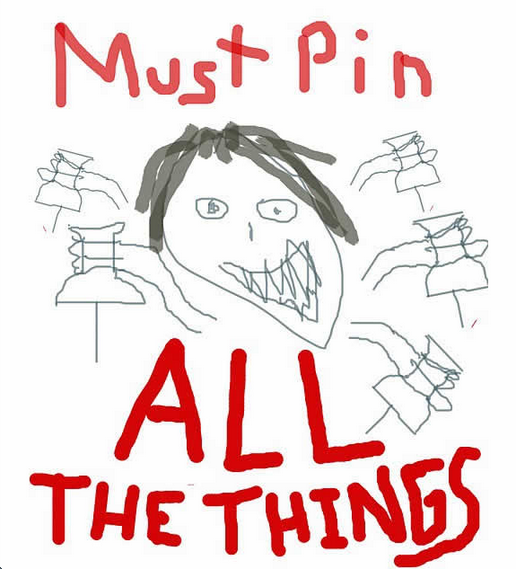
Why hello Pinterest, my old friend, how i’ve missed you!!!!
RGMP7: Learn How to Shoot Decent Photos by Mindy McAdams
 Mindy McAdams 7th post in a series titled “Reporter’s Guide to Multimedia Proficiency” shares ways to improve your photojournalism skills.
She begins the article by squashing the number one excuse for not being able to take decent photos – the lack of expensive camera equipment. McAdams explains that “it’s the person who gets a great shot – not the device.” Every journalist should be able to capture a decent photo in breaking news situations and every blogger should be able to capture great photos in order to enhance their blog’s esthetics. McAdams’ advice on camera settings, the rule of thirds, lines, balance, framing, and avoiding mergers will help any beginner, novice, or intermediate level photographer improve their techniques and subsequently their shots. Even I, the daughter of a photographer who has been taking pictures her whole life, learned a few things as digital cameras have changed quite a few things. Give it a read – you will walk away more informed and that is always a good thing!











 The World According to Robin